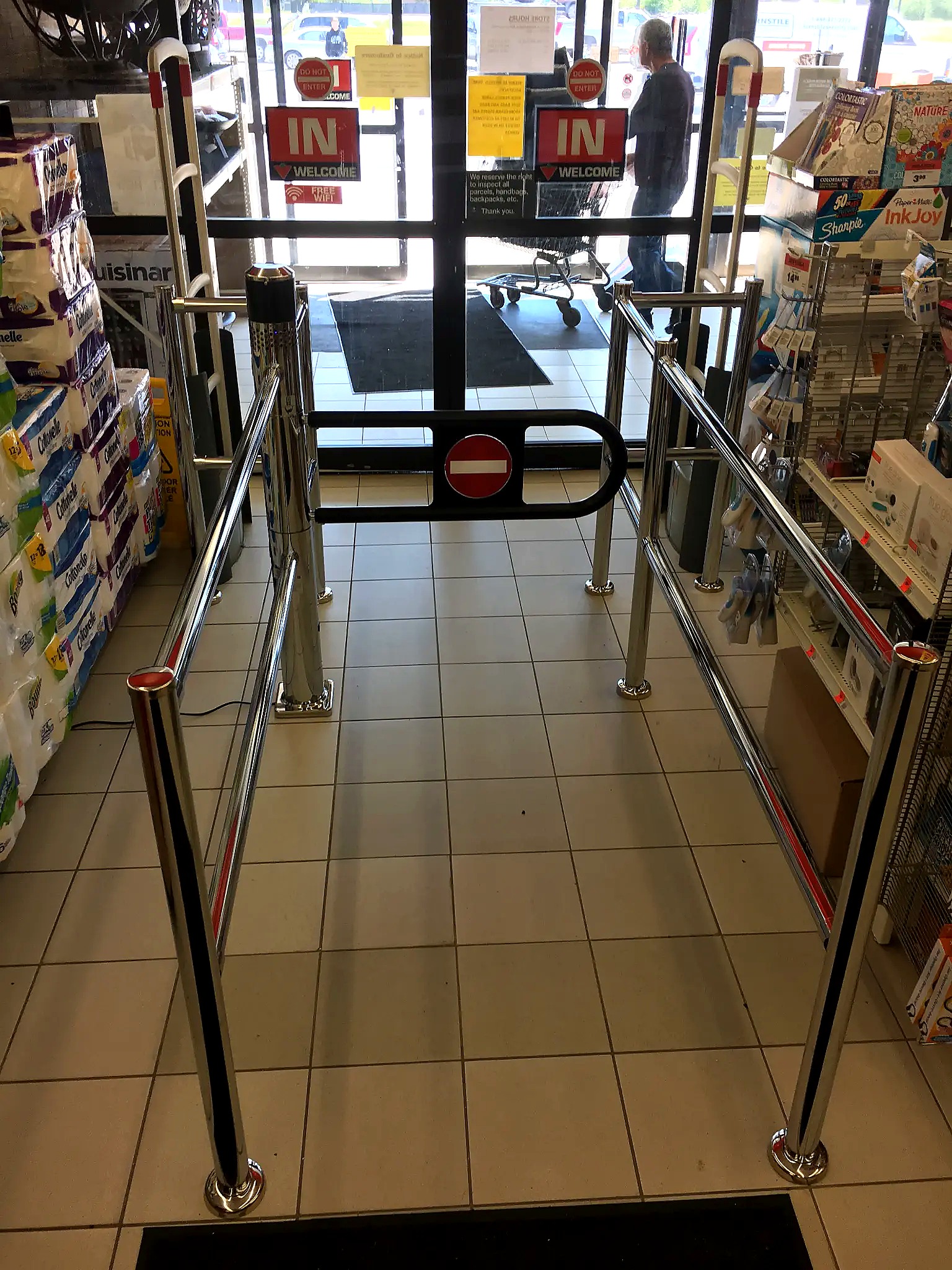
The Americans with Disabilities Act (ADA) and Canada's Accessibility for Ontarians with Disabilities Act (AODA) establish clear, enforceable requirements for accessible access control systems. For organizations operating in North America, compliance is not optional — it is a legal requirement with significant financial penalties and, more importantly, a fundamental obligation to ensure equal access for all individuals.
ADA STANDARDS FOR ACCESS CONTROL (U.S.)
The ADA Standards for Accessible Design (2010) establish specific requirements for accessible routes, including access control points. These standards apply to all places of public accommodation and commercial facilities in the United States.
- Clear width: Minimum 32 inches for single passage, 36 inches preferred for wheelchair users
- Operating force: Maximum 5 lbs for interior doors and gates
- Hardware: Operable with one hand without tight grasping, pinching, or twisting
- Maneuvering clearance: 18 inches on pull side, 12 inches on push side
- Threshold: Maximum 1/2 inch high, beveled if between 1/4 and 1/2 inch
- Closing speed: Minimum 5 seconds to close from 90° open position
- Accessible route: Accessible gate must be on the accessible route
AODA STANDARDS (ONTARIO, CANADA)
Ontario's AODA Integrated Accessibility Standards Regulation (IASR) builds on ADA principles with Ontario-specific requirements. Key differences include a stronger emphasis on the accessible route being the primary route (not a secondary entrance), and specific requirements for staff training on accessible gate operation.
- Accessible route must be the same route as the general public route
- No 'separate but equal' accessible entrances — accessible gate must be at the main entrance
- Staff training: All staff must be trained to assist users with accessible gates
- Maintenance: Accessible gates must be maintained in working order at all times
- Temporary closures: If accessible gate is temporarily closed, alternative access must be provided
CHOOSING AN ADA/AODA-COMPLIANT GATE
Not all 'accessible' gates are created equal. To ensure genuine ADA/AODA compliance, look for products that are factory-certified to the applicable standards, not just marketed as 'accessible.' Key specifications to verify include:
- Factory-certified clear passage width of 36 inches or greater
- Documented operating force of 5 lbs or less
- Automatic open option for users who cannot operate the gate manually
- Compliance certificate included with every installation
- Third-party testing documentation available on request
GET ADA/AODA CERTIFIED GATES INSTALLED BY COMPLIANCE EXPERTS
Get a free, no-obligation quote from Canada's trusted access control experts.
Request a Free Quote