The Accessibility for Ontarians with Disabilities Act (AODA) is one of the most comprehensive accessibility laws in North America. For organizations operating in Ontario, AODA compliance is not a recommendation — it is a legal requirement with significant financial penalties for non-compliance. As the 2025 full compliance deadline approaches, organizations that have not yet addressed their access control systems face increasing regulatory risk.
Access control systems — including turnstiles, swing gates, and security barriers — are among the most visible and impactful accessibility touchpoints in any facility. A non-compliant gate that prevents a wheelchair user from entering a building is not just a legal liability; it is a fundamental failure of organizational values and a direct violation of the AODA's core principles.
WHAT AODA REQUIRES FOR ACCESS CONTROL SYSTEMS
The AODA's Integrated Accessibility Standards Regulation (IASR) sets out specific requirements for accessible routes, including access control points. These requirements apply to all organizations with one or more employees in Ontario, regardless of size or sector.
- Clear passage width: Minimum 36 inches (915mm) for accessible lanes
- Operating force: Maximum 5 pounds (22N) to open or operate the gate
- Maneuvering clearance: Adequate space for wheelchair approach and departure
- Accessible route: Accessible lanes must be on the accessible route, not a detour
- Signage: Clear, visible signage identifying accessible entry points
- Level floor surface: No raised thresholds or lips at gate entry/exit
- Timing: Sufficient time for slower users to pass through before gate closes
- Staff training: All staff must be trained on accessible gate operation
THE PENALTY FRAMEWORK: WHAT'S AT STAKE
AODA penalties are structured to be significant enough to compel compliance. Under the Act, organizations can face:
- Corporations: Up to $100,000 per day for each day of non-compliance
- Individuals: Up to $50,000 per day for each day of non-compliance
- Directors/officers: Personal liability for corporate violations
- Reputational damage: AODA compliance status is publicly reported
- Human rights complaints: Separate liability under the Ontario Human Rights Code
"Accessibility is not a feature — it is a fundamental right. Organizations that treat AODA compliance as optional are not just breaking the law; they are excluding 22% of Canadians from full participation in their facilities."
— Ontario Accessibility Directorate
COMMON AODA COMPLIANCE FAILURES IN ACCESS CONTROL
The following are the most common AODA compliance gaps seen in access control installations:
- Accessible lane too narrow: Many older installations have lanes under 36 inches
- Excessive operating force: Gates requiring more than 5 lbs to push open
- Accessible lane as an afterthought: Accessible gate placed at a secondary entrance
- No accessible lane at all: Some facilities have only standard turnstiles with no accessible option
- Broken or non-functional accessible gates: Accessible lanes that are locked or out of service
- Inadequate signage: No clear indication of where the accessible entry is located
- Staff not trained: Staff unable to assist users with the accessible gate
THE AODA-COMPLIANT SOLUTION: WIDE-LANE ADA SWING GATES
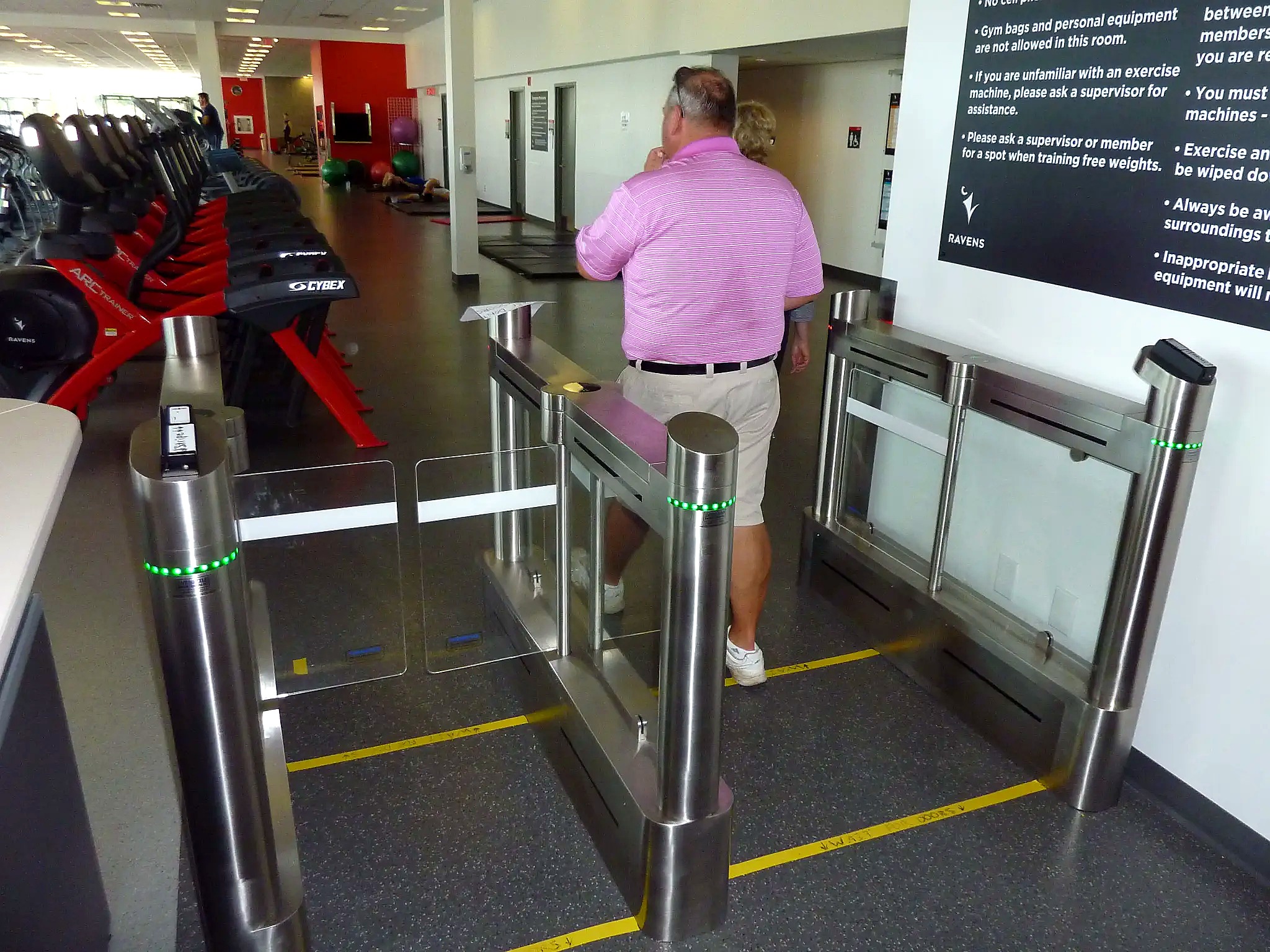
The standard solution for AODA-compliant access control is a wide-lane swing gate installed alongside standard turnstiles. These gates provide a clear passage width of 36–48 inches, an operating force well below the 5-pound maximum, and automatic open capability for users who cannot operate the gate manually.
Turnstile Security Systems' ADA/AODA swing gates are designed to meet all applicable standards. Every product ships with documentation confirming conformance with AODA, ADA, and NFPA requirements — useful for your own regulatory records.
CONTACT US TO FIND THE RIGHT AODA-COMPLIANT PRODUCT FOR YOUR FACILITY
Get a free, no-obligation quote from Canada's trusted access control experts.
Request a Free QuotePLANNING YOUR AODA COMPLIANCE UPGRADE
- Step 1: Audit existing access control points for AODA compliance
- Step 2: Identify non-compliant lanes and document deficiencies
- Step 3: Design compliant replacement or supplementary gates
- Step 4: Obtain building permits if required for structural modifications
- Step 5: Install AODA-compliant gates with factory compliance certification
- Step 6: Train all relevant staff on accessible gate operation
- Step 7: Document compliance for regulatory reporting